
Treat the membrane as a system
Coordinate substrate, falls, primer, vapour control, insulation, base and cap sheets, upstands, drains and terminations.
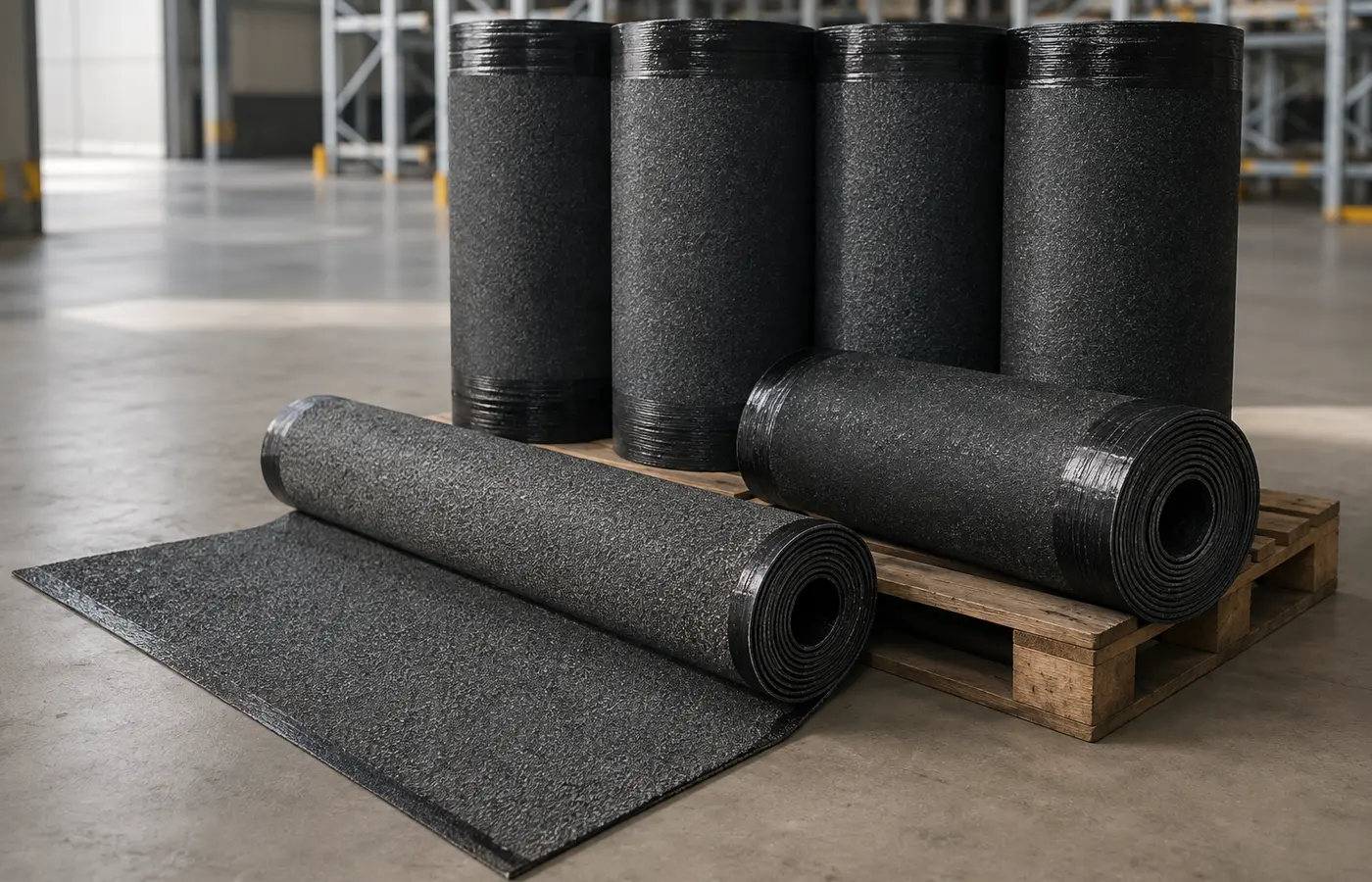
Use the current system specification; visually similar rolls may have different functions and application methods.
Prepare a sound, dry substrate
Remove dust, loose material, sharp projections, oil and standing water; repair movement and level defects before covering them.
Apply compatible primer at the stated rate and allow it to dry. A membrane cannot correct reverse falls or a sunken drain.
Lay rolls with drainage
Start from low points and drains so water flows over or parallel to laps, never against them. Dry-lay and align before bonding.
Offset end joints between adjacent rolls and between layers. Use lap widths printed on the roll or stated for the selected system.
Make continuous, controlled laps
Avoid fishmouths, wrinkles, air pockets and dry seams. Self-adhered, cold-bonded, hot-air and torch systems need different pressure and heat.
IKO calls for fully bonded torch-on cap sheets with sealed laps and a controlled bitumen bead; overheating can damage the sheet just as underheating can leave a dry lap.
Detail corners and upstands
Provide the specified cant, reinforcement and manageable vertical strips rather than forcing a field roll around a sharp corner.
Dry-fit inside and outside corner pieces, stagger their joints and finish the top edge with the approved termination or metal flashing.
Build the drain detail
Set the drain at the finished waterproofing level and avoid reverse falls or a pile-up of seams around it.
Use the compatible flange, reinforcement, clamping components and two-layer detail required by the system; keep the outlet clean and test drainage safely.
Control torch work as hot work
Identify timber, insulation, voids, vents, cables, solvents and concealed combustibles. Use a flame-free detail where fire can enter a gap.
Require trained operatives, a hot-work permit, extinguishers, secured cylinders, hose checks, a fire watch and post-work monitoring under applicable rules.
Inspect and document
Check every side and end lap, corner, upstand, drain, penetration and edge for open seams, blisters, burns or damage before covering the work.
Record products, batches, weather, layers, photographs, repairs and maintenance needs; conduct water testing only when the design and drainage system permit it.