
Begin with the opening style and how it will be used
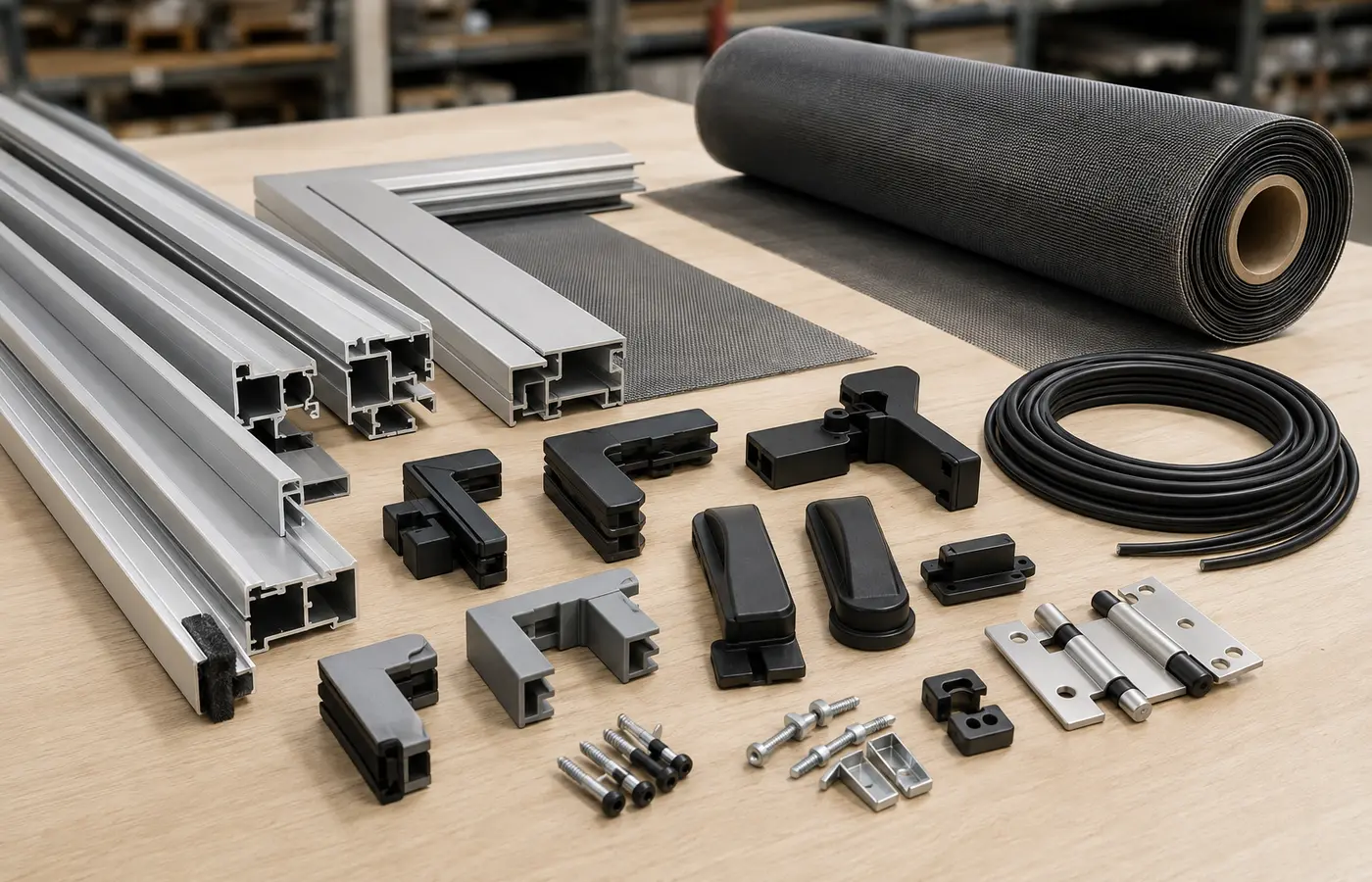
An insect screen is a system, not just mesh. The frame, corner keys, spline, handles and either hinges or rollers must work together. A fixed frame may suit a rarely accessed window, while a frequently used balcony door generally needs a hinged or sliding solution. Check the window or door sash, handle, drip edge and shutter path before choosing the system.
Record whether installation is inside or outside, whether the screen must be removable for cleaning, and whether children or pets may contact it. Insect mesh is not fall protection and cannot replace a guard or child-safety device. For large, wind-exposed or fall-risk openings, follow the system manufacturer's limits and use competent installation.
Measure the whole opening, not one point
Measure width and height at several points. An out-of-square opening can make a frame based on one reading bind on one side and leave a gap on the other. Include the spline channel, hinges, sliding track and handle clearances. State clearly whether your figure is the clear opening, finished outside frame size or cutting size.
Cut deductions and the depth of corner keys vary between systems. Use the selected frame-and-corner manufacturer's cutting table rather than a memorised allowance. For sliding screens, verify upper and lower track clearance, roller adjustment and the closing position. Record dimensions in millimetres as width × height.
Keep frame, corners and operating parts within one compatible system
Profiles that look similar can have different chambers, spline grooves and corner sockets. A forced corner can spread the frame; a loose one can pull it out of square. Select frame, corner keys, crossbars and caps from a compatible series. For hinged screens match hinge hand, catch and handle; for sliders match the track and roller geometry.
Match the visible corner, handle and hinge colours as well as the frame finish. In coastal locations, the material of metal fasteners and springs also matters. Do not combine dissimilar metals in persistent wet contact without manufacturer approval, and clean away salt and dirt. Accessible, replaceable fittings simplify future maintenance.
Mesh selection also affects spline size
Standard fibreglass mesh is flexible and easy to fit; aluminium mesh is stiffer but can retain dents from impact or poor tensioning. Fine insect, solar-control and pet-resistant products may be thicker. Balance visibility, airflow, small-insect exclusion, strength and cleaning needs instead of assuming every mesh is interchangeable.
Phifer advises choosing spline from both groove size and mesh thickness; thicker specialty mesh may require a smaller spline. Check the channel and selected mesh even if you have the old spline. Oversized spline can distort the frame or damage mesh, while undersized spline may release it. Test the combination on a short offcut first.
Use a flat bench, balanced tension and careful trimming
Lay the frame on a clean, flat bench and compare its diagonals. Align the mesh, leaving trimming allowance on every side. Phifer recommends rolling the correct spline into the groove while keeping the mesh straight and seating it securely at corners. Work around the frame with balanced tension so one edge does not bow.
Trim excess mesh toward the outside of the spline groove without cutting the installed screen. Use eye and hand protection around sharp blades, aluminium burrs and wire ends. Check hinge clearance and closing on hinged units; on sliders clean the track, adjust rollers and verify anti-derail details. Large leaves may require two-person handling.
Prepare these details before requesting a quotation
For each opening provide the joinery type, clear width and height, screen system, frame colour, mesh type, installation side and quantity. Add dimensioned photos of possible clashes such as handles, shutters, tracks, drip edges or sills. For replacement parts, close-ups of the profile section, groove, corner, roller or hinge help identify compatibility.
At handover check frame square, mesh tears or waves, spline seating at every corner and smooth operation. Remove grit from tracks; clean frame and mesh with a soft brush, mild soapy water and a clean rinse. Andersen warns that oil-based cleaners or lubricants can leave a dust-attracting film, so follow the specific system manufacturer's care instructions.