
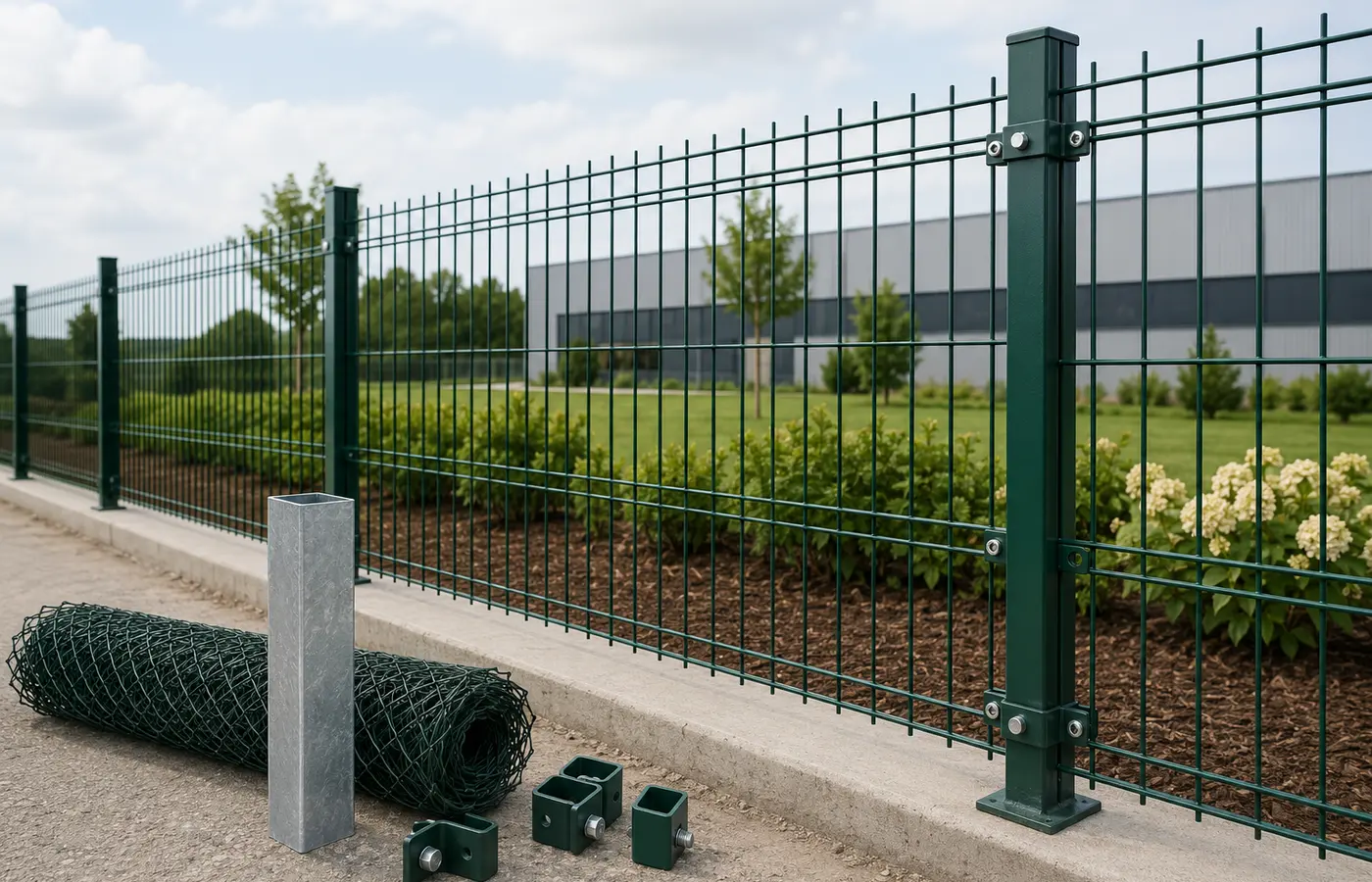
Maintain the complete fence line
Panels, posts, foundations, anchors, clips, bolts, caps, gates and ground conditions work together. Walk the full line and keep dated photographs.
Betafence recommends checking connection screws and post caps regularly and replacing missing or damaged parts promptly.
Begin with a safe visual inspection
Record bent panels, leaning posts, open joints, loose clips, missing bolts, sharp wire ends and broken caps from both sides where accessible.
Do not pull the fence with a vehicle or test it violently. Treat sharp edges and possible collapse near public areas as immediate safety risks.
Investigate repeated loose fixings
Check clips and bolts for missing parts, thread damage, wrong orientation and incompatible metals. Excessive tightening can crush wire or cut the coating.
Repeated loosening can indicate vibration, poor alignment, impact or foundation movement; correct the cause rather than adding improvised wire or screws.
Assess posts, foundations and anchors together
Check plumb, level, cracking, soil loss, standing water, loose anchors and gaps beneath base plates. Ground movement may not be obvious from the top.
Do not force a leaning post straight while panels remain attached. Suspected concrete, edge-distance or retaining-wall failures need competent assessment.
Classify coating damage correctly
Clean gently with light soapy water and low pressure, then distinguish dirt, staining, topcoat scratches and exposed steel. Avoid aggressive washing and wire brushing.
AGA explains that galvanized-coating repair depends on preparation and approved methods; ordinary grey paint is not automatically a galvanized repair.
Control water, soil and vegetation
Persistent irrigation, mud, fertilizer, salt spray and leaf buildup delay drying. Restore drainage, trim vegetation and prevent mower or strimmer impacts.
Keep designed drain holes open and inspect previous touch-up areas closely, as AGA notes they may weather differently from surrounding zinc.
Treat gates as moving assemblies
Check gate posts, hinges, locks, stops and frames for sag, rubbing, misalignment or cracks. Forcing a gate shut can worsen the cause.
Assess the leaf, post plumb, foundation and hardware together. Powered gates require isolation and the manufacturer's safety procedure.
Record and verify repairs
Log location, date, photograph and severity. Separate minor missing parts from leaning posts, cracked foundations or widespread coating failure.
After repair check alignment, sharp edges, gate operation and touch-up. Verify the actual system, product and project requirements rather than assuming stock or performance.