
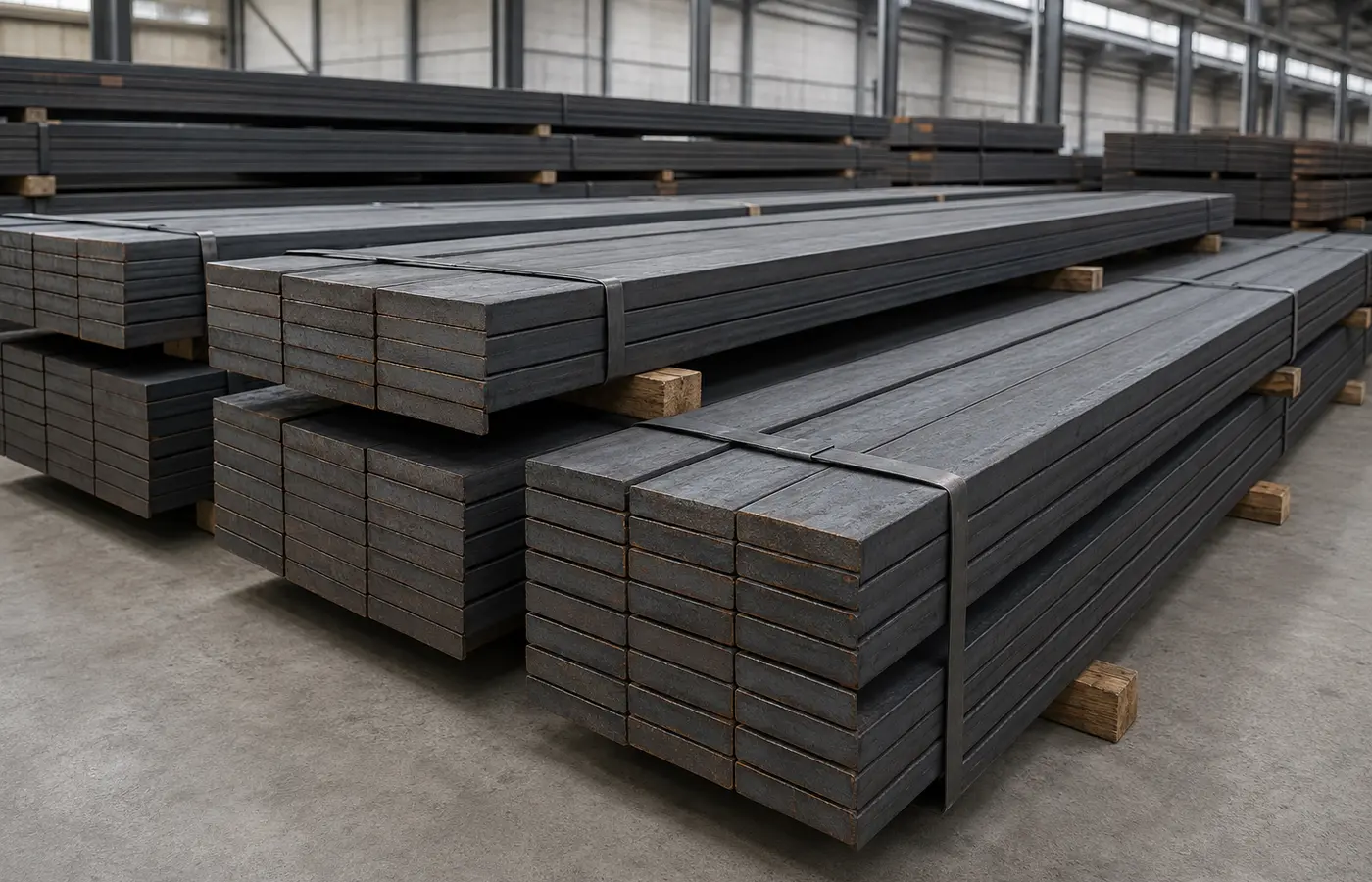
Describe the section before relying on its name
Trade names can vary. State width × thickness, length, quantity, grade, surface and intended processing separately, and identify which number is width.
ArcelorMittal lists flat bar by dimensions, length and grade, and notes mill scale on certain hot-rolled products. Confirm the actual label and surface for the order.
Select the section from its function
Record whether the part is a lug, strap, frame member, clamp or reinforcement. Holes, edge distances, welds, bends and loads influence selection.
Do not infer structural capacity from nominal dimensions alone. Grade, production route and tolerances matter; structural parts require the project engineer's design.
Plan length, quantity and waste together
Create a finished-parts list, then allow for kerf, end trimming, mitres, deburring and trials. Confirm the supplier's actual stock length before nesting cuts.
Label usable remnants with section, grade and length. Unidentified offcuts can be mixed into later work and should not be treated as reliable stock.
Coordinate holes and bends first
Show hole centres, diameters, slots, countersinks, edge distances and datum faces. Identify handed parts and never choose clearance from bolt name alone.
Bend radius, line, rolling direction and springback can change developed length. Validate the sequence on a sample before production.
Prepare surfaces for fabrication
Mill scale, oil, dirt and rust need different preparation. Match cleaning to the coating, welding consumable and manufacturer's instructions.
Check burrs, sharp corners, heat effects and distortion after cutting. Use an approved welding sequence and procedure rather than guessing weld size.
Match delivery to the order
Compare the order with bundle labels; verify representative dimensions, lengths, quantity and surface condition before processing.
If there is a discrepancy, preserve photographs, labels and measurements and request the relevant document instead of assuming grade, tolerance or certification.
Store and lift for the shape
OSHA requires tiered materials to be secured against sliding or collapse and bar stock to be racked or blocked against spreading and tilting.
Do not hoist from packaging bands. Select rated equipment for weight, length and centre of gravity, and protect slings from sharp edges.
Close with a controlled first piece
Put section, grade, length, cut, holes, bends, welding and finish on one work order. Measure the first piece before batch cutting.
Recheck count, burrs, orientation, holes, straightness, welds and finish. Safety-critical fabrication requires the current design, standards and competent approval.