
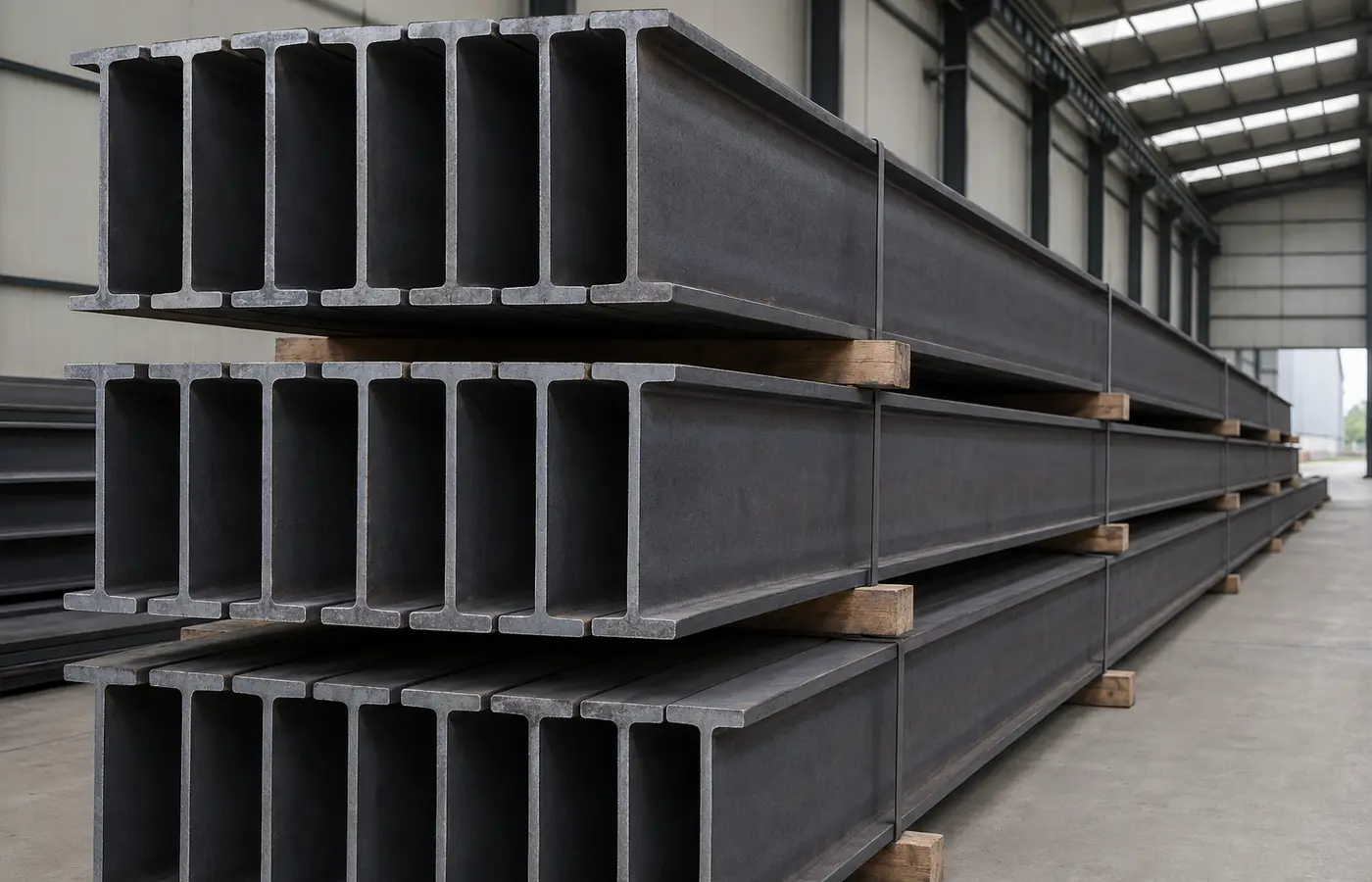
Do not treat IPE as a complete specification
State the exact section designation, grade, length, quantity, cutting, surface, tolerances and documentation. IPE dimensions and rolling tolerances refer to different standards.
Verify web, flange, root radius, mass and section properties in a current producer table. Substituting IPN or HE for IPE requires design approval.
Match grade to design and exposure
Section size and steel grade are separate decisions. Give the complete grade suffix, delivery condition and any toughness requirement required by the project.
Welding, low temperature, fatigue, galvanizing and fire design can affect grade selection and fabrication controls; availability is not approval to substitute.
Define length, allowance and ends
Identify net and stock lengths, cutting angle, reference end, machining allowance and tolerance in the cutting list.
Coordinate transport, crane and workshop limits. State coating limits and the repair method for processed ends.
Separate nominal size from acceptance tolerance
Rolled sections have permitted variations in dimensions, squareness, straightness, length and mass. Inspect against the standard named in the order.
If a connection needs tighter limits, agree them before ordering and define the measurement method, location and equipment.
Assess surface and straightness before fabrication
Hot-rolled surface condition is not a decorative finish. Define preparation for paint, metallizing or galvanizing and do not hide corrosion under coating.
Quarantine permanent bow, twist, flange damage or suspected laminations. Do not heat-straighten or cut service openings without an approved procedure.
Keep documents tied to the steel
Specify the required inspection document and match producer, standard, grade, heat or lot, dimensions and results to the purchase record.
Record labels before breaking bundles and define identity transfer after cutting. Do not return unidentified offcuts to safety-critical work.
Close delivery, stacking and lifting controls
Check designation, grade, length, quantity, labels, documents and visible condition before cutting or painting; record and segregate discrepancies.
Select handling equipment from load weight, size and shape. Stabilise stacks, align dunnage and keep everyone clear of suspended loads.